

Global Citizenship blog
 The Euro 2012 football competition final rounds start in Poland and Ukraine tomorrow, and offer great opportunities for some more learning about global citizenship. Teams of players from many European nations (sadly not Scotland) and thousands of back-up staff and supporters will enjoy two weeks of top class sport. Details of the fixtures schedule, and coverage of the competition are on the BBC website among others.
Thousands of school pupils will have the additional benefit of learning new things in areas such as sport, health, Europe, travel, countries and languages - but also in less obvious areas such as literacy skills. An article in The Guardian describes how students can be inspired to read more. Teachers could also initiate lessons about media coverage and bias.
For themes around global citizenship, there are interesting discussions to be had about the environmental impact of thousands of people travelling from their homes to Eastern Europe, the issue of diversity and possible racism and violence at the venues, and the labour issues around production of balls and strips. One example: a teaching resource about football, fair trade and literacy.
Enjoy the games!
More Each year Refugee Week grows and increases in profile, making its mark on the UK’s cultural calendar. This year’s theme Spirit captures:
Refugee Week is all about having fun, broadening horizons and breaking down barriers. Every June the week long UK-wide festival of arts, cultural and educational events celebrates contributions refugees have made to the UK, and promotes understanding about why people seek sanctuary.
Click here to see the exciting programme of activities and events for 2012>>
More Yesterday the national finals of the Euroquiz 2012 competition were held in the Scottish Parliament Debating Chamber in Edinburgh. Congratulations to St Mary’s Primary School, Duntocher, West Dunbartonshire, whose team won this year’s event; and well done to all the teams of Primary 6 pupils from around Scotland who took part in the regional heats and in the finals. The knowledge displayed by the students, and their skills in information retrieval, were very impressive for all of us who saw them in action at the various stages of the competition.
The event was recorded by Scottish Parliament TV, and the archive video footage is now available for viewers on their website.
The Euroquiz competition has been organised annually by the Scottish European Educational Trust for some years, and continues to attract mass participation and enhance learning about aspects of the European Union.
MoreTeachers are adept at finding effective and innovative ways to support student learning, and I often see great examples of this for various aspects of global citizenship. Here in Scotland there’s a system run by the General Teaching Council Scotland by which teachers can get Professional Recognition for excellent practice.
Last week a celebratory event was held in Glasgow at which local teachers received their Award certificates for their achievements in education for global citizenship. It was a pleasure to talk to the teachers involved, and see the displays of material about school partnerships with sub-Saharan Africa, e-twinning projects, Comenius school partnerships in Europe, and much more. Congratulations to all involved.
Ten of those teachers are also involved in the ‘Global Storylines’ project led by WOSDEC (West of Scotland Development Education Centre), Glasgow City Council and the University of Strathclyde. This uses the Storylines approach to get pupils to develop stories around themes such as conflict, sustainability and food. A dissemination event to be held at Strathclyde University later this week will share some of the experience gained from this project with a wider group of teachers.
More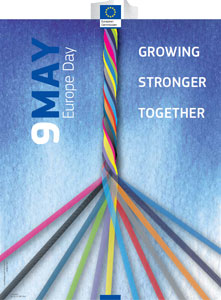 May 9th is Europe Day, a chance to celebrate our place in the European Union, and many teachers will mark the occasion with some special activity in school. Modern Languages are often the focus of such activity, but teachers will approach the Day in different ways to explore aspects of culture, history and contemporary life - such as food and drink.
Euroquiz 2012 has stimulated a huge amount of positive work in Scottish primary schools, with teachers encouraging their pupils to increase their knowledge about European countries and institutions. Hundreds of schools are involved in this annual quiz organised by Scottish European Educational Trust, with each school putting forward a team of P7 pupils to represent them in local heats. An example; West Kilbride primary won the North Ayrshire heat. The local winners then go forward to the national Finals, which will be held in the Scottish Parliament on 14th May. If you would like to watch the Finals live, the event will be broadcast on Holyrood TV and you can test yourself against the questions presented to the pupils.
Football is often a topic which appeals to Scottish pupils and their teachers, and the Euro 2012 football finals in Poland and the Ukraine will provide another context for learning more about Europe. UEFA is running a Respect your Health campaign with schools in the two host countries, with another campaign for adults focusing on combating racism in the sport, showing how football can bring people together and encourage responsible behaviour. The Euros are now just 43 days away, and some of us are getting excited!
MoreSchool open day - Wed 23rd May 2012
 Since opening in August 2007, Kinnaird Primary School has demonstrated a strong commitment to Global Citizenship. It was the first school in Falkirk to achieve Fairtrade status, has achieved two ECO Schools green flags, Falkirk Council’s International Education Awards (Stage 2) and the British Council Intermediate Level Developing Internationalism Award, in addition to Falkirk Council’s Platinum Level Enterprise Education Award.
Download programme for open day>>
Programme
9.30 Registration and Coffee
9.45 Welcome and introduction by Pamela Adamson, Headteacher
10.00 Tour of school
Participants given tour of school by pupils/staff in small groups, including visits to classes
11.00 Coffee break
11.30 Presentation about the school’s journey (Pamela Adamson and pupils)
12.00 Informal question and answer session
12.30 Lunch
13.15 Presentation by Megan Farr, Policy Officer, outlining the work Falkirk Council Education Services do to support and promote Global Citizenship in schools
13.30 Reflection and professional dialogue
Participants exchange ideas and reflect on personal experience in the light of the visit
14.45 Close
If you wish to register for this Open Day, please contact Megan Farr on 01324 506671 or [email protected]
More
Bucksburn Academy in Aberdeen embarked on a Comenius project (currently awaiting acceptance from the North Sea Commission) with several European countries on ‘Re-thinking Energy’. They recently held a conference bringing together expertise from the energy sector and Aberdeen City Council with 134 people attending.
The project will focus on investigating renewable energies in Scotland, its future prospects and the impact this has on education and employment. All European partners in the Comenius project will look at the issues from their particular perspective and share these findings.
For more information on the project visit: bucksburnacademy.org.uk
 2012 is the European Year of Active Ageing and Solidarity between Generations, and celebrates the contribution that older people make to life and society. One aspect of this theme is the quality of the relationship and interaction between the different generations in society, and among the initiatives addressing this theme are two which will interest teachers.
The European People’s Party has launched a Film competition for young people in the European Union aged under 30 years old. It invites them to create a film on the theme of ‘Solidarity between generations’, to last just one minute - short and focused. The rules and application process are online, and the closing date is 15th May.
Another opportunity for Schools is the Life Story Challenge, run by the new generations@school project. This competition asks young European citizens to work with older people to collect stories about people’s lives, and then share these through the project website using text, images, audio and video. There is a particular emphasis on gathering material through activities around 29th April, the European Day of Inter-generational Solidarity, but uploads can be made until 30th June.
Such competitions offer a chance for students to demonstrate their creativity, film-making and communication skills, and some understanding of inter-generational issues.
More The European Commission’s Eurydice unit has published ‘Entrepreneurship Education at School in Europe’. This thematic report is a useful summary of the current position of education for entrepreneurial skills in schools across the European Union, providing both an overview and descriptions of the position in individual member states.
Scotland is in a strong position, having undertaken years of extra activity through the broad ’Determined to Succeed’ Enterprise education programme and also implemented a new curriculum framework . Organisations such as Young Enterprise Scotland and EthCo continue to work with schools to promote the Enterprise agenda and help our young people become enterprising, ethical global citizens.
Two of the categories in the Scottish Education Awards 2012 relate to Enterprise activity in Primary and Secondary schools, and these awards continue to expose excellent practice in many Scottish establishments.
MoreSchool open day - using international education to develop a whole school approach to global citizenship
 Venue: Bo’ness Academy, Falkirk
9:30am – 3.00pm
Thursday 17th May 2012
Note: this event was due to place at an earlier date in the year but has now been rescheduled for the date above.
Theme: International Education
This CPD event offers practitioners and school leaders an exciting opportunity to visit Bo’ness Academy and attend Falkirk Council’s Global Citizenship Showcase Event.
Bo’ness Academy is an inspiring example of a school that has used international education as a vehicle to engage the whole school in global citizenship activities. Through the Comenius Programme and other well established links the school has developed a rich international programme connecting it to countries across the world including: The Gambia, The Netherlands, China, France, Germany and The Czech Republic.
A focus of the event will be to identify and share the practical lessons and ideas that have helped the school move forward on its journey including:
Participants will have the opportunity to meet and talk with the Head Teacher, International Coordinator, staff and learners and also tour the classrooms and school. Time will also be set aside for participants to reflect and share their own experiences.
Download Programme for Bo’ness Academy Open Day 17May12
How to book
To book, please contact Megan Farr, Policy Officer, Falkirk Council. Email: [email protected] or Tel. 01324 506671.
Places for the open day section of the event are limited so please book early to avoid disappointment. This is a free event!
More
This blog contains ideas, resources and information to support global citizenship activities in schools - including international, sustainable development and citizenship education and also games legacy.
Find us on