

Global Citizenship blog
Falkirk Council global citizenship showcase and school open day
 Venue: Bo’ness Academy, Falkirk
9:30am – 3.00pm
This event will now take place on Thursday 17th May 2012
Theme: International Education
This CPD event offers practitioners and school leaders an exciting opportunity to visit Bo’ness Academy and attend Falkirk Council’s Global Citizenship Showcase Event.
Bo’ness Academy is an inspiring example of a school that has used international education as a vehicle to engage the whole school in global citizenship activities. Through the Comenius Programme and other well established links the school has developed a rich international programme connecting it to countries across the world including: The Gambia, The Netherlands, China, France, Germany and The Czech Republic.
A focus of the event will be to identify and share the practical lessons and ideas that have helped the school move forward on its journey including:
Participants will have the opportunity to meet and talk with the Head Teacher, International Coordinator, staff and learners and also tour the classrooms and school. Time will also be set aside for participants to reflect and share their own experiences.
Following the open day event, participants will also have the opportunity to attend Falkirk Council’s Global Citizenship Showcase event which will also be taking place in Bo’ness Academy from 4pm – 6pm. This will feature exhibitions and displays from leading organisations such as Eco-Schools Scotland and the British Council and will showcase innovative global citizenship practice from many Falkirk schools.
How to book
To book, please contact Megan Farr, Policy Officer, Falkirk Council. Email: [email protected] or Tel. 01324 506671.
Places for the open day section of the event are limited so please book early to avoid disappointment. This is a free event!
Download programme for Bo’ness Academy Open Day >>
MoreSCIPD Group Study Visit to the Netherlands
6th - 10th March 2012
Theme: The Circular Economy - Sustainable technologies, design, economics and production for the 21st century
 Education Scotland is inviting applications from secondary teaching staff for a group study visit to ‘s-Hertogenbosch in the Netherlands to investigate how cradle to cradle technologies and a circular economy can be used as a rich and stimulating context for interdisciplinary learning relating to sustainable development education and global citizenship. This visit has been arranged in partnership with the Ellen MacArthur Foundation.
The Scottish Government is committed to a low-carbon and zero-waste economy, and it is important to develop enterprise, creativity and STEM (Sciences, Technologies, Engineering and Maths) skills in young people to ensure the realisation of these ambitious plans for the future. The circular economy concept proposes the use of sustainable technologies and innovative design and production methods that minimise waste and reduce the exploitation of the earth’s precious resources. Industrial companies in the Netherlands are at the forefront of developing products that mimic natural processes and that are designed for disassembly and reuse.
Education Scotland, in collaboration with The Ellen MacArthur Foundation, is developing strategies for professional development around sustainable development education and the circular economy to encourage the setting up of communities of practice among practitioners in Scotland. These will provide opportunities for ongoing, localised support and collaboration as recommended by Teaching Scotland’s Future.
It is expected that the visit to the Netherlands will include:
- Orientation sessions with the Ellen MacArthur Foundation and the Dutch curriculum agency SLO, to introduce participants to the model of the circular economy and brief them on the structure of the Dutch school system and curriculum
- Visits to businesses which have adopted cutting-edge approaches to circular economy principles
- Visits to schools to see how learning relating to the circular economy is being used as a theme for interdisciplinary learning around sustainability
Travel to the Netherlands will be on Tuesday 6th March, with three working days in the area, followed by return to Scotland on Saturday 10th March.
SCIPD funding will cover return flights to the Netherlands, airport to hotel transfers, and overnight hotel accommodation in ‘s-Hertogenbosch on a bed and breakfast basis.
Participants will be offered a pre-visit preparatory meeting, and a post-visit meeting to support follow-up activity and encourage wider impact.
This study visit is targeted at education professionals in Scottish secondary schools, particularly teachers of sciences, technologies, mathematics, business studies, economics and geography.
Expected learning outcomes
Participants will have an opportunity to:
Upon returning from the study visit, participants will be expected to:
Applicants may wish to use the experience of the study visit towards professional recognition by GTCS or simply to enhance their professional understanding and practice.
Applications are invited from suitably qualified members of Scottish school or authority staff, who should complete the Netherlands group application form available below or from Nick Morgan at [email protected]
The closing date for applications is Tuesday 21st Feb 2012
SCIPD Netherlands application form
More Environment Online - ENO is a global virtual school network for sustainable development.
Learning is student and problem-centred with both online and offline activities. At the end of each theme there is a campaign week during which the results of learning are raised in local communities and on the web. Students eventually become ambassadors for the environment of their respective local communities and regions. Regular themes and have been forests, climate change, ecological footprint and different cultural themes.
The success of the ENO Programme lies in the fact that it is run by teachers. Over 7000 schools from 105 countries are part of the ENO network. The ages of learners involved range from 12 - 18 years.
Objectives
Visit http://www.enoprogramme.org/ to find out more.
More The Charlemagne Youth Prize competition for 2011/12 has just been launched, and schools throughout Europe have been invited to submit an application before the deadline of 23rd January 2012. The Prize aims to recognise and encourage the development of European consciousness among young people, as well as their participation in European activities and programmes. Schools often have a wealth of global citizenship and international work underway with students, including curricular projects or activities with a European focus, and might consider making an entry.
The Prize is awarded to projects already undertaken by young people that foster understanding, promote the development of a shared sense of European identity, and offer practical examples of Europeans living together in one community. A jury in each EU member state will select a winning entry, and the European-level winners will then be selected from these 27 shortlisted projects. The three overall winners will get cash prizes and will be invited to visit the European Parliament in autumn 2012 for the award presentation. In addition, representatives of all the 27 national winners will be invited to a visit to Aachen, Germany, the home of the Foundation of the International Charlemagne Prize of Aachen.
Schools considering an entry might benefit from looking at the work of previous shortlisted projects. The UK online lifestyle magazine “Europe and Me” won first prize in 2011. http://www.europeandme.eu/ The second and third prizes went to “Balkans beyond Borders”, a short-film project from Greece, and the “Escena Erasmus project in Spain about cultural and linguistic exchanges.
MoreTime: 9:30am – 3.00pm
Theme: International and citizenship education within Early Years
Woodacre Nursery invites practitioners to visit the school and find out about their dynamic international education programme gaining them full International Schools Award, Green Flag status and the ‘Trades House Citizenship Award’. The nursery school has been involved in Global Citizenship Education for the last 6 years embedding many initiatives related to this theme into their curriculum.
Key themes of the day will be a presentation on e-twinning programmes, the school’s transformative Comenius project involving 5 other European countries and the effective use of Glow to deepen international links.
The programme will also include:
Participants will also have an opportunity for professional dialogue and the exchange of ideas on the day.
Flyer and Programme: Woodacre Nursery Open day, 18 Nov 11
How to book
To book, please email: [email protected] or Phone 0141 282 5172.
Places are limited so please book early to avoid disappointment. This is a free event!
This is one of a series of open day events organised by Education Scotland’s Developing Global Citizenship Team. View the full programme of open day events here>>
MoreBritish Council supports schools in Scotland to make connections in Europe and globally and provide a wide variety of opportunities including accreditation and grants for CPD, exchange visits, work placements abroad and joint curriculum project work with partner schools.
The following up-coming opportunities and deadlines are opened to any school in Scotland in order to develop new and existing global connections:
Connecting Classrooms: Project with schools in the Middle East– Jordan, Lebanon, Oman, Saudi Arabia, United Arab Emirates. Deadline: 21 October
Schools with existing China school partnerships can also apply on 21 October to receive funding to develop joint curriculum work and involve students in partner visits.
For more information visit: www.britishcouncil.org/connectingclassrooms
£250 is available for staff costs, travel and subsistence to explore the idea of long term equitable partnerships with schools in Africa, Asia, Latin America and the Caribbean.
Reciprocal Visit Grants (for partnerships with Africa, Asia, Latin America and the Caribbean): 1 November- 9 January (deadline)
For more information: www.dfid.org.uk/globalschools
ETwinning and Comenius: These projects can help schools to start new partnerships projects with European partners. In-Service Training on professional development courses or job shadowing and to host Comenius Assistants in 2012. under: www.britishcouncil.org/comenius or www.etwinning.net
Online resource including partner finding and accreditation to receive recognition for schools’ global citizenship and international work is also available through www.britishcouncil.org/schoolsonline.
More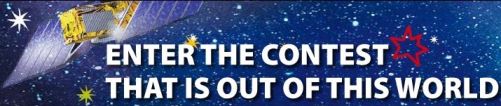 We aspire to help create global citizens who understand Scotland’s place in the world. Now here’s an opportunity for children to think about Scotland’s place in the universe.
The European Commission has launched a drawing competition for children aged 9-11 and living in the UK. The child who wins the competition will have a Galileo Programme Satellite named after them and launched into space, along with similar satellites named after other winners in the 27 European Union member states. To take part, each child must create and submit a piece of artwork based on the theme ‘Space and Aeronautics’. For example, this might be a picture of the Earth with other planets and satellites, or the launch of the rockets carrying the Galileo satellites. Children are invited to give free rein to their imagination and use any drawing, painting and colouring material and techniques they wish. Pictures must then be scanned or photographed and uploaded to the competition website by 15th November 2011. The winner will be announced at an awards ceremony where the child will be presented with a trophy representing the real satellite that will be named after them. Details online at http://www.galileocontest.eu/en/competition
The Galileo Satellite Programme is Europe’s independent satellite navigation system. The programme will launch at least 27 satellites, keeping Europe at the forefront of space-related technologies. The system will have many functions including transportation management and mobile phone applications. The Galileo Satellite Programme website provides background information. http://ec.europa.eu/enterprise/policies/satnav/index_en.htm
More There are many ways for teachers and pupils to increase their knowledge of Europe, its cultures and institutions, enabling them to become more active citizens of the European Union. Here’s just two:
Today primary school children from all over Scotland gathered at the Scottish Parliament for the final rounds of the Euroquiz competition. Teams of pupils answered questions about many aspects of life in Europe, with their classmates back at school able to see the event through a live broadcast on Holyrood TV. Pupils from Edinburgh Academy won the competition, (pictured here on the stairs of the Parliament) with Cairneyhill Primary in Fife the runner-up. Congratulations to all the young people who took part in the contest this year.
The Scottish European Educational Trust (SEET) has been running the quiz since 1993, as a means to promote and encourage learning about Europe, with sponsorship from Standard Life. The European Parliament office in Edinburgh also supports this work, and has a great variety of resources to help teachers embed a European dimension in their classrooms.
BBC Scotland website carried a news story about the day. And the BBC Radio Scotland show hosted by Fred Macaulay featured the competition in this morning’s broadcast. Fred interviewed a teacher and pupils from Kirknewton Primary School, who described the benefits of the experience and tested the knowledge of the radio presenters.
Comenius School Partnerships, funded by the European Commission, are another common way for students and teachers to increase their involvement with European isuues and cultures. Last week Hutchesons’ Grammar School held an event in Glasgow to celebrate the conclusion of a successful two year partnership with schools in Nuremberg, Germany, and Radomsko, Poland.
Students from these three high schools collaborated on a series of creativity projects, using photographs and film to document their activities and the urban spaces of each city. The organisers say “key to the success of the partnership has been a willingness to embrace new ideas, be open to cultural differences and recognise the benefits of exploring a range of different approaches to learning and teaching outwith the classroom”.
Nick
More The programme for the Scottish Learning Festival 2011 has been published online, and potential visitors can check out the range of presentations, seminars, school showcase sessions, and side events. The conference programme is complemented as usual by a big exhibition featuring providers of commercial and non-for-profit services for educators and pupils.
This year the key theme for the festival is “Curriculum for Excellence: Learning, Teaching and Assessment, making the connections”. There is a strong showing for Global Citizenship, with practitioners and development officers leading sessions on citizenship, international education, and sustainable development. For example, there are seminars on Climate Change, Games Legacy, Rights Respecting Schools, and much more.
In the Exhibition Hall, there will be a Global Village stand, and our Global Citizenship team will be delighted to talk to teachers and visitors who drop in to find out more about activities in schools and the support we can provide. Come and join us at the show!
The event will be taking place at the Scottish Exhibition and Conference Centre in Glasgow on Wednesday 21st and Thursday 22nd September 2011. We’re expecting thousands of Scottish education professionals to join us, and we will also welcome several hundred international visitors who come to explore aspects of Scottish education policy and practice. An international reception on the Wednesday evening provides an occasion for networking between overseas visitors and Scottish staff.
Come and join us !
More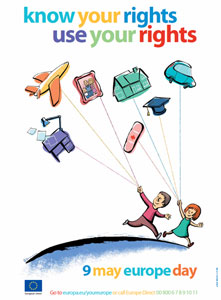 Today is Europe Day, the annual date for celebration of the existence and activities of the European Union. Many Scottish schools work throughout the year to support student learning about Europe, taking part in initiatives such as the primary school Euroquiz
This is also the month of ‘Comenius Week’, when schools celebrate the successes of intercultural dialogue achieved through the EU’s Comenius partnerships programmes. Scotland has benefitted from many Comenius school partnerships, with both bilateral and multilateral school projects, and the newer Regio programme has enabled partnership working at local authority level too.
All the major European organisations offer support to teachers who want to include a stronger European dimension to their work in schools. Three examples: the annual European Day of Languages (26th September) initiated by the Council of Europe; the education resources such as ‘Crisis Point’ produced by the European Parliament offices; and the resources such as ‘Passport to the EU’ created by the European Commission.
On this 9th May, a BBC News web story focuses on poor language skills among British people and the impact of this on their ability to win jobs with European institutions.
More
This blog contains ideas, resources and information to support global citizenship activities in schools - including international, sustainable development and citizenship education and also games legacy.

Find us on