

Global Citizenship blog
 This comprehensive case study developed in partnership with Rhu Primary School in Argyll and Bute shows the climate change can provide an excellent context for learning even with the youngest learners.
The case study is a description of an extended, collaborative early and first level interdisciplinary study on climate change undertaken by the Primary 1, 2 and 3 classes at the school.
The study was called Polar Lands and was based on the book ‘Who will save us?’ by Rebecca Morch. It incorporated the themes of enterprise and sustainability. The project also involved parents and community partners from the planning stage right through to the evaluation of the success of the learning.
This study exemplifies the following characteristics of interdisciplinary learning:
Click here to see the full case study and accompanying videos.
More
With a month to go there is still time to take part in the inaugural documentary entitled “The UK’s Best Sustainable Schools”.
This film is being produced by Cycling4SEEd who will be visiting (by bicycle and other sustainable means of travel) schools from Lands End to John O’Groats and capturing on film the freshest ideas, the best practice, the most exciting plans and hopefully even the most exciting results of sustainability in schools.
Cycling4SEEd cannot visit every school in the country but there are still ways for you and your schools to be part of this very important film to encourage all schools to take up sustainability:
For details of how to get involved in any of these activities, please visit the SEED website at www.se-ed.org-uk. You can also follow the story of Cycling4SEEd’s journey along the backbone of the UK as they visit schools, hear stories, see sustainable projects and share ideas.
For all your enquiries, please email [email protected].
More A key starting point for global citizenship education is a richer understanding of your own culture. Here in Scotland there are great new resources, challenges and projects which will facilitate learning about this country and what it means to be a Scot.
The ‘Studying Scotland’ online resource produced by Education Scotland is intended to support teachers in their work with students learning about aspects of Scottish culture, both historic and contemporary. There is already a wealth of material on the history, arts and cultural life of Scotland. The site will be updated with additional resources over the coming months, to give extra coverage of aspects such as Scotland’s place in the world and contribution to international developments. Museums and cultural organisations will be important participants in this shared endeavour to promote knowledge of Scottish life.
Education Scotland has launched a new design challenge through its ‘Marks on the Landscape’ website, as a means of engaging with creative young people. The challenge is aimed at CfE second to fourth levels and can be linked with a range of curriculum areas including art and design, science, and technologies, and themes such as sustainability. It invites learners to create a design for a double-sided billboard to signal the entry and exit points to Scotland - for example alongside the motorway as drivers enter the country. The design should offer different perspectives for people who are arriving and people who are leaving, and might also reflect on why people need to leave their home country or why they would come to Scotland today. The site has support material and further instructions for the billboard challenge, and entries should be submitted by 21st June.
Finally, the ‘Great Tapestry of Scotland’ project will involve the creation of a history of Scotland in tapestry-form, produced by hundreds of volunteer stitchers through a huge community arts initiative. A Scottish Parliament news story reports on the project launch. The final product will include key scenes from the span of Scottish history and demonstrate the creativity of Scots living today.
More 2012 is the European Year of Active Ageing and Solidarity between Generations, and celebrates the contribution that older people make to life and society. One aspect of this theme is the quality of the relationship and interaction between the different generations in society, and among the initiatives addressing this theme are two which will interest teachers.
The European People’s Party has launched a Film competition for young people in the European Union aged under 30 years old. It invites them to create a film on the theme of ‘Solidarity between generations’, to last just one minute - short and focused. The rules and application process are online, and the closing date is 15th May.
Another opportunity for Schools is the Life Story Challenge, run by the new generations@school project. This competition asks young European citizens to work with older people to collect stories about people’s lives, and then share these through the project website using text, images, audio and video. There is a particular emphasis on gathering material through activities around 29th April, the European Day of Inter-generational Solidarity, but uploads can be made until 30th June.
Such competitions offer a chance for students to demonstrate their creativity, film-making and communication skills, and some understanding of inter-generational issues.
More The not-for-profit organisation TED is best known for outstanding videos called TED Talks, which disseminate new ideas on subjects such as technological developments and shifts in society. Now the organisation has launched a new education initiative TED-ED, which includes a dedicated education channel on YouTube.
This channel already includes some great video assets for Global Citizenship education, with expert teachers, communicators and animators creating videos which explain important concepts and issues. My current favourites are a piece on how Pandemics spread, and another on the impact of Containerisation in the trend towards globalisation. This bank of high-quality educational digital content will continue to build up, as new clips are added, and forms a valuable resource for teachers looking for a stimulating supplement to school lessons and class work.
More Environment Online - ENO is a global virtual school network for sustainable development.
Learning is student and problem-centred with both online and offline activities. At the end of each theme there is a campaign week during which the results of learning are raised in local communities and on the web. Students eventually become ambassadors for the environment of their respective local communities and regions. Regular themes and have been forests, climate change, ecological footprint and different cultural themes.
The success of the ENO Programme lies in the fact that it is run by teachers. Over 7000 schools from 105 countries are part of the ENO network. The ages of learners involved range from 12 - 18 years.
Objectives
Visit http://www.enoprogramme.org/ to find out more.
More For the first time, everything you want to know about Scotland’s environment will now be available at the touch of a button on a new website provided by Scotland’s key environment and health agencies.
Scotland’s Environment Web – named SEweb – aims to be the gateway to everything you want to know about Scotland’s environment. This three year project, supported by funding from the European Union, will put Scotland at the global forefront of sharing environmental information, prioritising problems and involving citizens in assessing and improving their own environment.
Features of SEweb will include:
Visit the website at: http://www.environment.scotland.gov.uk/default.aspx
More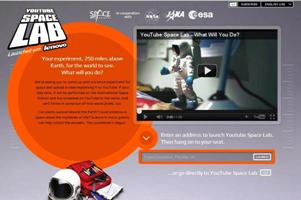 The YouTube Space Lab http://www.youtube.com/spacelab?feature=etp-gs-space is an open competition inviting young people aged 14-18 to come up with an idea for a science experiment in space. Participants don’t actually have to do the experiment, they make a short video to describe and explain the idea, and then upload their video entry to the YouTube online service. Here their work will be evaluated by the judges and viewed by an international audience of millions.
Participants can work as individuals or in small teams to generate their idea and produce their video. The winning ideas will be conducted for real on the International Space Station (ISS), and broadcast live on YouTube for everyone to see. The overall winner will also get the chance to either watch the rocket take-off from Japan, or take a special astronaut training course in Russia when they reach the age of 18.
Given the wealth of talent in Scottish schools, it would be great to see a Scottish student achieve at this high level of international competition.
Full details on the Space Lab webpages. http://www.youtube.com/spacelab?feature=etp-gs-space The competition is accepting entries until 7th December 2011.
More Travelling Green is a 6 week walking project which aims to encourage as many children as possible to change their method of travel to and from school, by increasing active commuting (walking) to school.
Travelling Green is an interdisciplinary project focusing on Health and Wellbeing with links to Science, Social Studies, Expressive Arts, Technologies and Languages.
Children learn about walking time and distance, they chart their progress to a more active journey to school and learn about healthy eating, why walking is good for them and how to stay safe on the walk to school.
Travelling Green is aimed at P5s (9 year olds) in primary schools in Scotland, but it can also be used in composite classes.
Increases in overall physical activity. Setting realistic, individual, achievable physical activity targets.
Sustrans has developed new, free, eye-catching interactive whiteboard flipcharts that can be used with any interactive whiteboard. The flipcharts complement the paper resource pack and provide more opportunities for engagement in the classroom. You can download the interactive resources for free from the Promethean Planet partnership pages.
More info is available on the Sustrans website.
More Education Scotland’s new-look Schools Global Footprint Calculator is now live and can be viewed at: http://www.educationscotland.gov.uk/schoolsglobalfootprint
This key online resource has had a significant make-over and now features:
The school estate is responsible for an estimated 50% of greenhouse gas emissions from local authorities. The online calculator allows learners to measure the ecological footprint of their school in relation to six topic areas: food, water, energy, buildings, transport and waste. Learners are also encouraged to develop innovative approaches to reducing their impact on the environment and promoting sustainable lifestyles in the wider community – from tackling the school run to growing and eating their own produce to reduce food miles.
In addition to providing an exciting real life context for delivering the experiences and outcomes, the resource greatly supports Eco-Schools activities and provides learners with skills for learning, life and work as Scotland move towards a low-carbon future.
View the Schools Global Footprint resource or find out more about Education Scotland’s sustainable development education resources.
More
This blog contains ideas, resources and information to support global citizenship activities in schools - including international, sustainable development and citizenship education and also games legacy.
Find us on